A 20 TH/s Kaspa miner can look compelling on a product sheet. In practice, the decision comes down to whether you can keep it powered, cooled and online at a cost that leaves room for profit. This IceRiver KS5 review looks beyond headline hashrate to the operating conditions that determine whether the machine earns its place in a serious mining portfolio.
The IceRiver KS5 is designed for KHeavyHash mining, with Kaspa as its primary target. It arrived as a high-output ASIC for miners who wanted meaningful Kaspa exposure without assembling a large number of lower-hashrate units. That focus is its strength, but it also makes the KS5 more sensitive to Kaspa network difficulty, KAS price movement and site-level operating costs than a diversified multi-algorithm strategy.
IceRiver KS5 review: the core specification
The standard IceRiver KS5 is generally specified at around 20 TH/s for KHeavyHash, with power consumption of roughly 3,000 W. That equates to an efficiency near 150 J/TH. Exact specifications can vary by batch, firmware and supplier listing, so buyers should verify the quoted hashrate, power rating, warranty terms and included power lead before committing capital.
At 3 kW, this is not a miner to treat as a domestic plug-and-play appliance. One unit running continuously consumes approximately 72 kWh per day before allowing for any facility overhead. The electrical circuit, distribution hardware, ventilation and ambient temperature all need to be planned around continuous load, not a brief benchmark run.
For an operator, the KS5’s appeal is straightforward: it concentrates substantial Kaspa hashrate into a single unit. That can simplify fleet management and reduce the number of devices to rack, cable and monitor. The trade-off is concentration risk. If the KHeavyHash economics deteriorate, a KS5 cannot be redirected towards Bitcoin or another SHA-256 network in the way a Bitcoin ASIC can be redeployed within its own ecosystem.
What the hashrate means for mining returns
Hashrate is only one input in a return calculation. A KS5 produces a share of the KHeavyHash network output relative to its hashrate, but that share changes as new machines join the network and difficulty adjusts. When Kaspa’s price rises, more miners are incentivised to switch on or deploy equipment. The result can be a rapidly growing network hashrate that reduces the number of coins earned per terahash.
This is why a profitable calculator result should be treated as a live estimate rather than a forecast. A proper KS5 model should account for the machine purchase price, shipping and import costs where applicable, hosting or facility charges, electricity price per kWh, pool fee, expected uptime and the likely timing of deployment. It should also include a downside case for higher network difficulty and a lower KAS price.
A simple operating-cost illustration makes the point. At a power draw of 3 kW and an electricity rate of £0.06 per kWh, the machine’s direct energy cost is about £4.32 a day. At £0.10 per kWh, it becomes £7.20 daily. That gap is material before cooling, labour, pool fees or downtime are included. A miner with access to competitively priced, professionally managed power has a very different investment case from someone paying high retail tariffs.
The right question is not whether the KS5 is profitable on a particular day. Ask whether the expected margin can withstand adverse movements without forcing an unplanned shutdown. That is the difference between buying hashrate and building an operation.
Cooling, noise and electrical planning
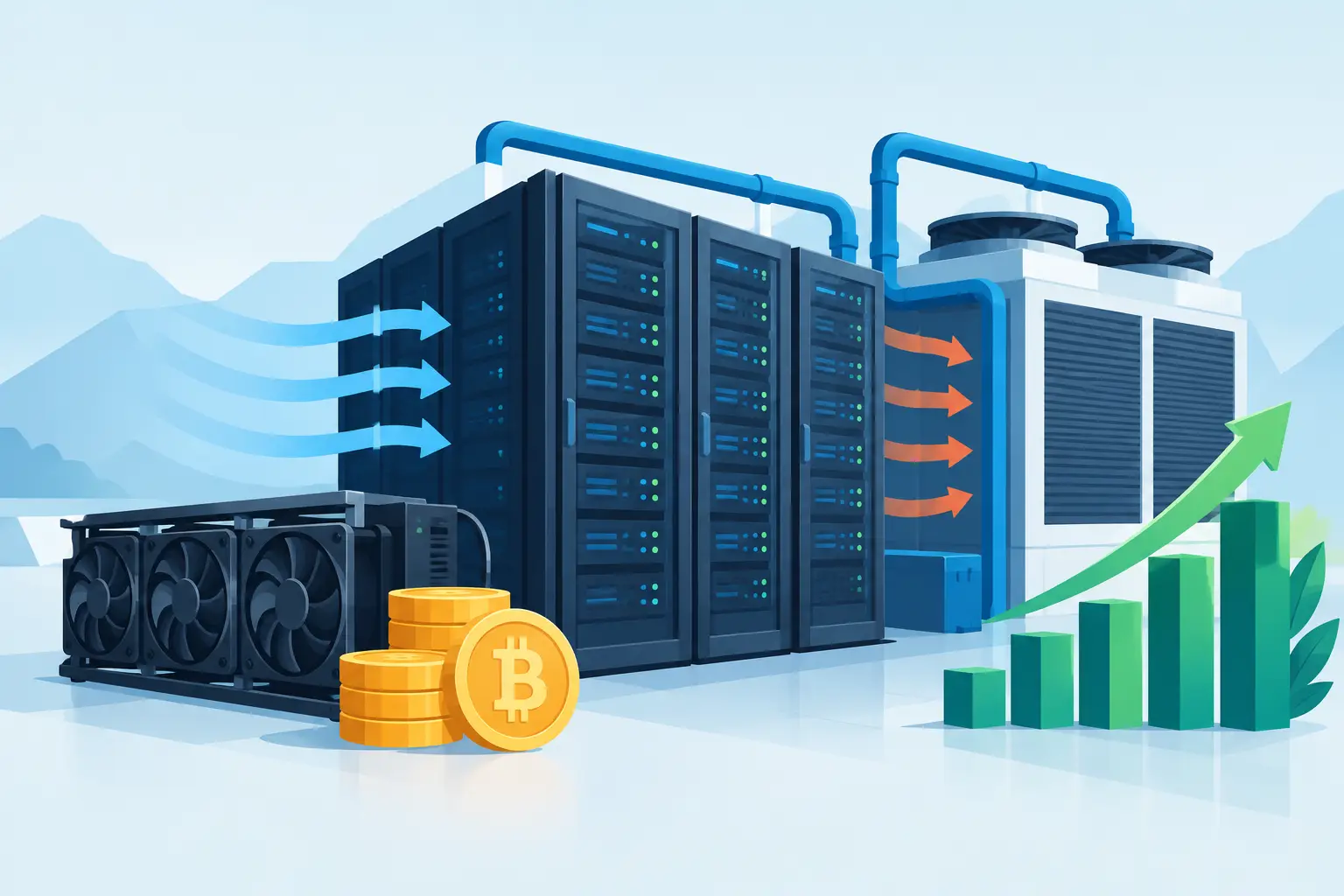
The IceRiver KS5 uses high-speed fans and air cooling. Like most high-performance ASICs, it produces significant heat and sustained fan noise. It belongs in a purpose-built mining environment or a properly engineered enclosed space, not a spare room, garage or lightly ventilated commercial unit.
A 3 kW miner converts nearly all of its consumed electricity into heat. Without adequate hot-air extraction, intake temperatures rise, fan speeds increase and hardware reliability can suffer. Recirculated hot air is one of the most common operational mistakes in small installations. A machine may appear stable at first, then develop hashrate fluctuations, elevated temperatures or repeated protective shutdowns as conditions worsen.
Electrical design matters just as much. The KS5 requires stable supply capacity, correctly rated cabling, appropriate breakers and power distribution that leaves a sensible safety margin. Overloading a circuit is not an efficiency issue – it is a reliability and safety failure. Fleet operators should also account for the site’s total heat load, not simply the individual miner’s rated consumption.
For many investors, managed hosting is the more commercially sensible route. A professional facility can provide engineered power distribution, controlled airflow, physical security, remote monitoring and technicians who can respond when a unit drops offline. This removes the operational work that often erodes the apparent savings of self-hosting.
Reliability is an operational discipline
The KS5 has no moving parts in its hashing boards, but it is not maintenance-free. Fans, power supplies, connectors and environmental conditions all affect uptime. Dust accumulation restricts airflow, high temperatures accelerate component stress and unstable power can cause avoidable faults.
Before deployment, record each machine’s serial number, expected hashrate, accepted-share rate and baseline temperature behaviour. Once operating, monitor pool-side hashrate as well as the miner dashboard. A unit can remain online while underperforming due to rejected shares, fan issues, thermal throttling or a partially failed board.
The most useful performance metric is not peak hashrate captured in a short test. It is average accepted hashrate over weeks, measured alongside uptime and energy consumption. A miner that delivers slightly lower headline output but stays stable is more valuable than one repeatedly taken offline for troubleshooting.
For a multi-unit KS5 deployment, retain a clear process for fault reporting, repair authorisation and replacement parts. Downtime becomes expensive when operators have to source support only after a failure occurs. This is where an infrastructure partner adds practical value: procurement is the beginning of the relationship, not the end of it.
Who should consider the KS5?
The KS5 suits miners who deliberately want high-density Kaspa hashrate and have access to suitable infrastructure. It can work well for an experienced operator expanding an alternative-coin fleet, or for an investor using managed hosting to gain exposure without personally operating a noisy, high-load device.
It is less suitable for buyers who need predictable fiat returns, have no tolerance for token-price volatility or only have access to expensive residential electricity. It is also a poor fit for anyone expecting to operate a 3 kW ASIC quietly at home. The machine is specialised capital equipment, and it should be assessed with the same discipline as any other revenue-generating asset.
Portfolio sizing matters too. Placing all available capital into one KHeavyHash model increases exposure to a single network’s economics. Some operators accept that concentration because they have a strong Kaspa thesis. Others balance it with Bitcoin ASICs or retain cash for future hardware opportunities. Neither approach is universally right, but the risk should be intentional rather than accidental.
The deployment decision
The strongest IceRiver KS5 setup is one with a confirmed delivery timeline, transparent all-in power pricing, monitored uptime and a defined support path if the machine develops a fault. Fast deployment is valuable because hardware sitting in transit or waiting for electrical work produces no coins, yet speed should never come at the expense of a credible operating plan.
BitHash can support this type of deployment from ASIC sourcing through to hosted operation, monitoring and maintenance, giving miners one accountable team rather than a chain of separate suppliers. For a single machine or a scaling fleet, the goal is the same: convert purchased hashrate into stable, measurable production with minimal operational drag.
The KS5 can be a strong Kaspa mining tool when the site economics are right. Before purchasing, model the downside, confirm the infrastructure and make sure your plan can keep the miner earning long after the excitement of its first day online has passed.
BitHash
Verified AnalystBitHash Infrastructure, UAE Colocation & Mining Intelligence Team