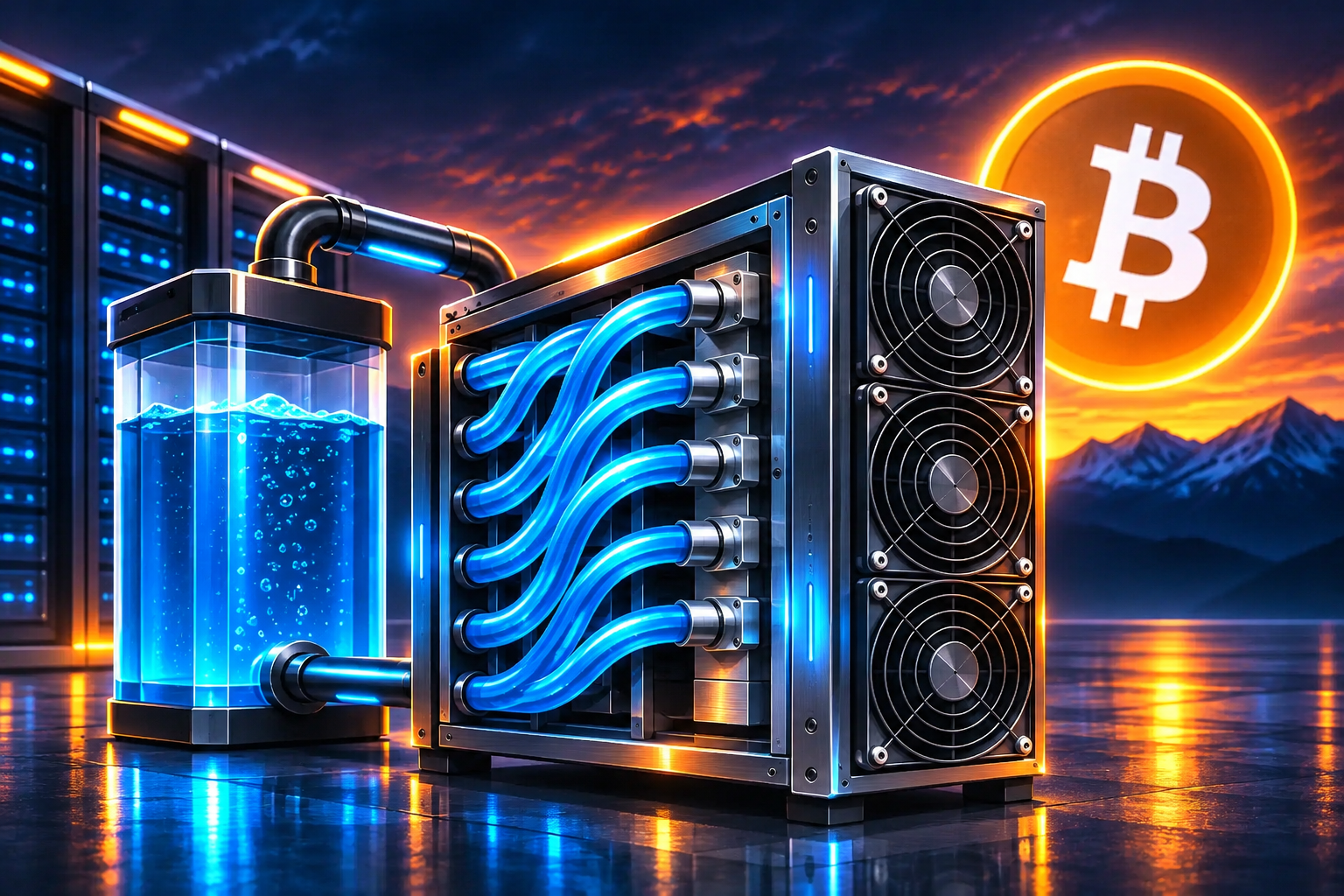
A hydro ASIC can deliver exceptional hashrate density, but it is not a machine you simply plug into a wall socket and forget. The best hydro cooled miners earn their place through more than a headline terahash figure. They need efficient silicon, dependable pumps and heat exchangers, correct water chemistry, responsive monitoring, and infrastructure designed to keep every unit running.
For miners building serious Bitcoin exposure, hydro cooling changes the operating model. It can reduce noise, support higher-density deployments and remove heat far more effectively than air. The trade-off is clear: the hardware must be matched to a properly engineered cooling loop and a hosting environment capable of maintaining it.
What Makes the Best Hydro Cooled Miners Different?
Hydro-cooled ASICs transfer heat from the hashboards into a closed liquid loop rather than relying on high-speed fans to force air through the machine. Warm coolant travels to a cooling distribution unit, heat exchanger or dry cooler, where the heat is rejected before cooled liquid returns to the miners.
This arrangement gives operators greater control over a facility’s thermal performance. Instead of filling a site with hot aisles, dust exposure and fan noise, a hydro deployment concentrates thermal management in purpose-built infrastructure. It is particularly valuable where land, container space or electrical capacity must generate as much hashrate as possible per square metre.
The catch is that a hydro miner is only as reliable as its environment. A highly efficient unit in a poorly balanced loop can suffer from thermal alarms, corrosion risk, leaks or repeated downtime. Hardware selection and facility design must therefore be treated as one investment decision.
Leading Hydro ASICs to Consider
The right choice depends on available capacity, target efficiency, budget, delivery timing and whether your host already supports a specific rack or manifold design. Specifications also change between batches, firmware versions and manufacturer releases, so final procurement should always be based on the confirmed model sheet rather than an advertised peak figure.
Bitmain Antminer S21 Hydro Series
Bitmain’s S21 Hydro family is a leading option for operators who want current-generation Bitcoin mining efficiency in a high-density format. Models in this range are designed for industrial liquid-cooled environments and are commonly considered by fleet operators prioritising competitive joules per terahash alongside substantial hashrate per machine.
The appeal is straightforward: fewer machines are needed to build meaningful site hashrate, which can reduce the number of network connections, rack positions and routine touchpoints across a large deployment. For a host with compatible cooling infrastructure, the S21 Hydro range can be a powerful route to scale.
However, high-output models place serious demands on electrical distribution and thermal rejection. Before ordering, confirm the input voltage, connector type, flow requirements, coolant temperature range and the maximum number of units each CDU can support. A machine that looks attractive on a per-unit basis may not be the best fit if it forces expensive upgrades to the rest of the facility.
MicroBT WhatsMiner M63 Series
MicroBT’s WhatsMiner M63 hydro units are established contenders for operators who value a practical balance of efficiency, performance and fleet reliability. WhatsMiner hardware has a strong following among professional miners, particularly those that prefer consistent operational behaviour and straightforward maintenance processes.
The M63 series is well suited to sites already built around WhatsMiner-compatible hydro infrastructure or those procuring a standardised fleet from the outset. Standardisation matters more than many new entrants realise. Keeping the same model family across a deployment can simplify spares planning, technician training, firmware management and performance benchmarking.
As with any hydro platform, check the exact configuration. A data centre must have the correct coolant connections, appropriate filtration and sufficient pressure and flow at the farthest point of the loop, not merely at the CDU outlet.
Canaan Avalon Hydro Models
Canaan’s Avalon hydro miners can be worth considering where availability, commercial terms or an existing Avalon fleet make them the sensible operational choice. They may not always lead every efficiency table, but the best purchase is not automatically the machine with the lowest quoted power consumption.
A miner can create stronger returns when it is available quickly, deployed correctly, supported with readily available parts and hosted under transparent electricity terms. For a smaller portfolio, avoiding unnecessary infrastructure complexity can matter more than chasing a marginal difference in efficiency.
Choosing a Hydro Miner by Economics, Not Hype
Hashrate is easy to compare. Mining economics are not. A sensible selection process begins with the machine’s efficiency in joules per terahash, then tests that figure against the complete cost of operating it.
Start with electricity pricing. Hydro miners draw substantial power, so even a small movement in kWh pricing can materially change projected margins. Next, account for hosting fees, cooling overhead, pool fees, repair provision and the cost of capital tied up in hardware. If a facility uses pumps, fans or chillers, their electricity use belongs in the total calculation too.
Then consider uptime. A slightly less efficient ASIC that remains online in a stable, professionally monitored environment can outperform a more efficient machine affected by recurring heat, power or network interruptions. This is why serious operators assess site-level performance, not just nameplate data.
Finally, assess fleet resale and refresh planning. New generations can shift the economics quickly, particularly after a Bitcoin halving or a significant rise in network hashrate. Buying hardware with a credible service path and a clear deployment plan provides more flexibility when it is time to expand, sell or upgrade.
The Infrastructure Hydro Miners Need
Hydro cooling is not a shortcut around data-centre engineering. It is data-centre engineering. The facility needs correctly sized electrical systems, cooling distribution, heat rejection, leak detection, water treatment, network resilience and physical security.
Coolant quality deserves particular attention. Untreated water can introduce minerals, biological growth and corrosion that compromise pipes, cold plates and heat exchangers. A professional operation uses a controlled closed loop, monitors fluid condition and follows the manufacturer’s requirements for coolant composition and operating temperature.
Redundancy also matters. Pump failure, a blocked filter or an overheating CDU can affect many miners at once. N+1 pump capacity, alarms, isolation valves and remote monitoring help contain faults before they become fleet-wide outages. The more concentrated your hashrate, the more valuable this protection becomes.
Noise is another practical advantage. Hydro units eliminate the intense fan noise associated with conventional air-cooled ASICs, but they do not make a mining facility silent. Dry coolers, pumps and other plant still generate sound, so site planning must account for neighbours, access and maintenance space.
Should You Buy Hydro or Air-Cooled ASICs?
For a home miner or someone with only a few machines, air-cooled equipment is often easier to understand and deploy, provided heat, noise and power can be managed safely. Hydro is rarely the right choice if there is no suitable cooling infrastructure behind it.
For investors hosting multiple miners, a hydro package can be compelling when the provider already operates purpose-built liquid cooling. You gain the density and thermal advantages without having to design a loop, source components or employ on-site technicians. This is where managed hosting turns specialist equipment into a more accessible mining asset.
For industrial fleets, hydro cooling becomes increasingly attractive as power density rises. It can support more efficient use of building space and help maintain controlled operating temperatures in demanding climates. Yet air cooling may still be the stronger commercial decision where infrastructure already exists, capital expenditure is constrained or cooling conditions are naturally favourable.
Questions to Ask Before You Commit
Do not buy a hydro miner before obtaining clear answers on the full operating environment. Ask whether the site has compatible CDUs and manifolds, how coolant is monitored and maintained, what uptime reporting is available, and who responds when a unit reports a fault.
You should also confirm the all-in commercial model: hardware price, deployment lead time, kWh rate, hosting charges, maintenance scope, repair turnaround and any minimum commitment. Transparent terms are essential because the apparent saving from a low machine price can disappear through poor uptime or unclear operational fees.
At BitHash, the practical goal is to align the ASIC, hosting design and support model before a miner goes live. That approach reduces avoidable deployment friction and gives investors a clearer view of how their equipment will perform after installation.
The best hydro miner is the one your facility can cool, power and support continuously at a cost that protects your margin. Choose the silicon carefully, but give equal weight to the infrastructure that keeps it hashing.
BitHash
Verified AnalystBitHash Infrastructure, UAE Colocation & Mining Intelligence Team