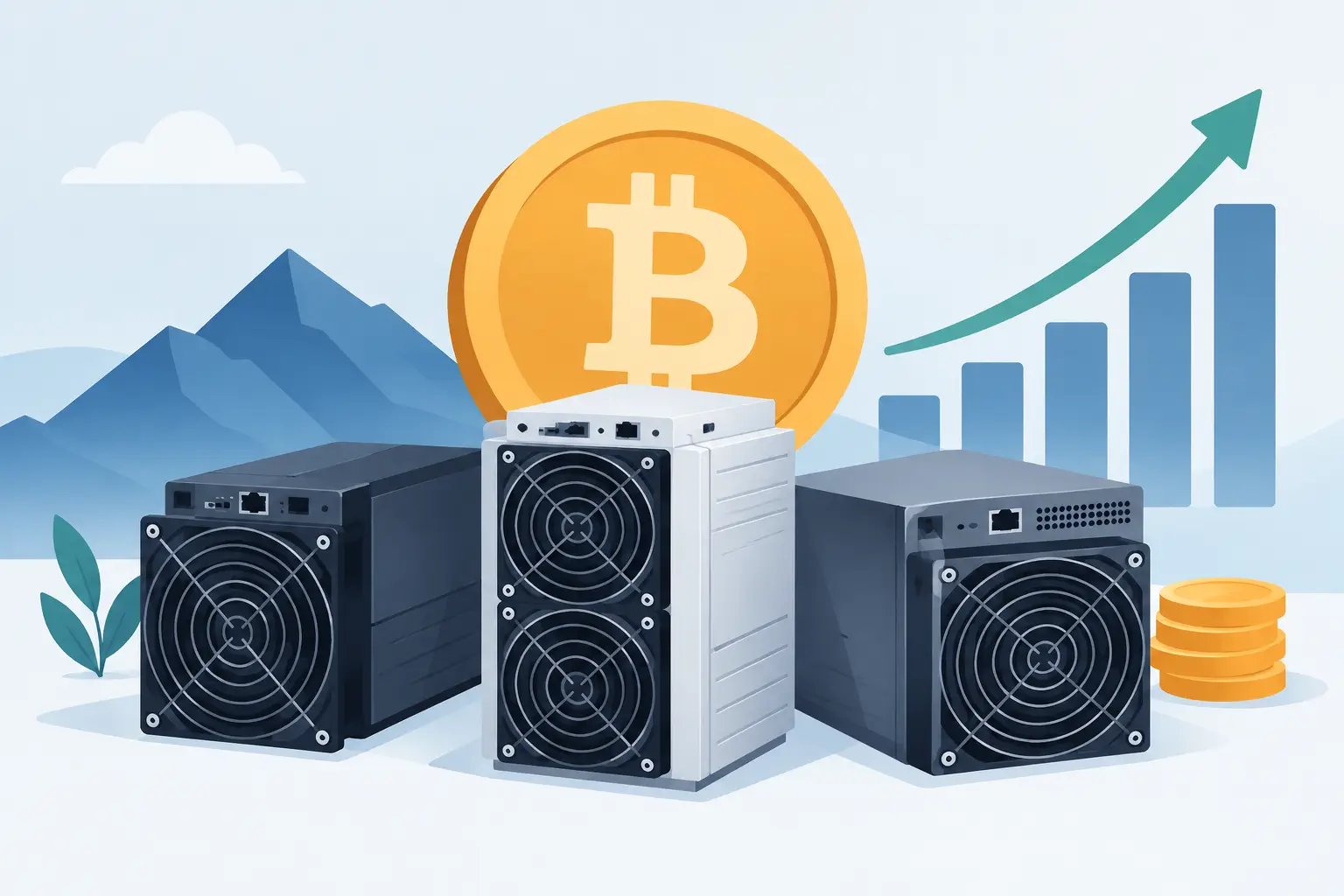
A mining fleet does not become profitable because the specification sheet shows an impressive hashrate. It performs when that hashrate stays online, power costs remain controlled, repairs are handled quickly and the chosen machine suits the site. In this top ASIC brands compared guide, the practical question is not simply which manufacturer is best. It is which hardware, cooling format and support route best match your mining plan.
For Bitcoin miners, Bitmain and MicroBT dominate most serious procurement conversations. Canaan remains a credible alternative, while specialist manufacturers serve selected algorithms and use cases. The right choice depends on your Capex, electricity rate, intended scale and whether you will run the equipment yourself or place it in managed hosting.
Top ASIC Brands Compared: What Actually Matters
Comparing brand names alone can be misleading. ASIC generations move quickly, and a previous flagship can become less attractive when network difficulty rises or a newer model materially improves joules per terahash. Start with the individual miner, then assess the manufacturer behind it.
Efficiency is usually the first filter. For SHA-256 Bitcoin mining, it is measured in joules per terahash, or J/TH. A lower figure means the machine uses less energy to produce each terahash. At a low electricity price, a less efficient unit may still have a place if its purchase price is compelling. At a higher kWh rate, efficiency can determine whether the machine continues mining through weaker market conditions.
Hashrate matters, but it must be read alongside total power draw. A 200 TH/s miner can generate more gross output than a 100 TH/s unit, yet it also requires more electrical capacity, cooling capability and rack space. Operators building a 150-machine fleet need to model the site load, transformer capacity, distribution design and ventilation before signing the purchase order.
Reliability is equally commercial. A miner that is marginally more efficient on paper but difficult to repair, slow to source parts for or poorly supported in your operating region can lose its advantage through downtime. For hosted miners, ask how failures are logged, who authorises repairs, whether spare parts are held on site and how quickly a machine returns to service.
Bitmain: Broadest Market Presence and Model Choice
Bitmain’s Antminer range is the most recognised name in Bitcoin ASIC mining. Its major advantage is breadth. Operators can choose air-cooled, hydro-cooled and immersion-ready options across several performance tiers, which makes it easier to standardise a fleet around a specific electrical and cooling design.
The latest Antminer S-series machines are often selected for high-hashrate deployments, particularly where power infrastructure is already designed for denser loads. Hydro models can be especially attractive for industrial sites because liquid cooling removes heat more efficiently than traditional air systems and can support a more compact layout. That benefit comes with a trade-off: the site needs properly engineered water loops, heat exchange equipment, leak detection and staff who understand the system.
For smaller operators, air-cooled Antminers remain straightforward to deploy and familiar to technicians worldwide. Their popularity also tends to support a healthy market for components, repair knowledge and resale. The compromise is noise and heat. A high-performance air-cooled ASIC is not equipment for a spare room. It belongs in a purpose-built environment with controlled airflow, filtration and appropriate electrical protection.
Bitmain is often a sensible choice where fleet standardisation, access to model variants and established repair pathways matter most. It is not automatically the winner for every site. Compare the exact model’s delivered cost, warranty terms and efficiency against the alternatives available when you buy.
MicroBT: A Strong Choice for Efficiency-Focused Fleets
MicroBT’s WhatsMiner line is a serious competitor in professional Bitcoin mining. Many operators value WhatsMiner machines for their build quality, consistent performance characteristics and strong efficiency in current-generation units. The range includes air-cooled and hydro-cooled options, giving larger miners flexibility as they increase density.
WhatsMiner is particularly worth considering when the fleet operator prioritises a repeatable operating profile. A standardised deployment simplifies technician training, spare-part planning and miner-management software configuration. If every rack contains several generations and brands of machines, monitoring and maintenance become more complicated than they need to be.
The decision often comes down to local availability and the delivered economics of a specific batch. A WhatsMiner with excellent J/TH can be the better long-term asset, but only if its upfront price, lead time and hosting requirements work for the project. Do not compare advertised machine prices without including shipping, customs, installation, pool fees, repair allowance and the cost of capital tied up before the miner goes live.
For operators using hosted infrastructure, ask whether the host has regular experience with the relevant WhatsMiner generation. Familiarity with firmware, control boards, fans and power supplies shortens fault diagnosis and helps protect uptime.
Canaan: A Credible Alternative for Diversification
Canaan’s AvalonMiner range offers another route into SHA-256 mining, particularly for buyers who do not want all fleet exposure concentrated in two manufacturers. Diversifying brands can reduce procurement risk when supply is constrained, provided the operational team can support the additional hardware type.
AvalonMiners deserve a model-by-model review rather than a quick judgement based on brand position. Their value proposition may be strongest when acquisition cost is favourable, local stock is available or a buyer needs equipment that fits an existing site configuration. A lower entry price can improve payback potential, but an older or less efficient machine is more exposed if Bitcoin price weakens or network difficulty increases.
For institutional deployments, brand diversification should be deliberate. Running three manufacturers is not automatically safer than running one. It can increase spare-parts requirements, technician workload and monitoring complexity. Diversify when it protects supply continuity or improves returns, not simply because variety sounds prudent.
Specialist ASIC Brands for Alternative Proof-of-Work Mining
Bitcoin ASICs are not the whole market. Miners targeting Litecoin, Dogecoin, Kaspa or other proof-of-work networks need algorithm-specific hardware, and specialist brands can be relevant. Goldshell, for example, is widely known among smaller-scale miners for units aimed at selected alternative algorithms. Other manufacturers periodically produce equipment for niche networks as profitability attracts demand.
This segment needs more caution than Bitcoin mining. A machine may show exceptional daily revenue when a new algorithm or coin is popular, then see returns compress rapidly as additional hashrate comes online. Liquidity in the second-hand market can also be thinner, and a network’s long-term economics may be less predictable.
Specialist ASICs suit operators who understand the algorithm, have a clear view of coin-market risk and can move quickly. They are rarely the best foundation for a conservative, long-duration mining portfolio. Before buying, verify the machine’s real power draw, available pool support, firmware options, repair path and expected resale demand.
Air Cooling, Hydro Cooling and the Brand Decision
The cooling method can matter as much as the logo on the front of the miner. Air-cooled units have lower infrastructure complexity and are easier to deploy into conventional mining containers or data halls. They demand substantial airflow, create significant noise and can suffer when dust, ambient heat or poor ventilation are left unmanaged.
Hydro-cooled ASICs shift more of the engineering burden to the facility. The miners themselves can operate at high density with controlled temperatures, while the site requires pumps, manifolds, heat rejection and continuous monitoring. For an industrial fleet with suitable infrastructure, hydro can support a cleaner, quieter and more space-efficient operation. For a first-time miner buying a handful of machines, air cooling is usually the more practical route unless using a managed hydro-hosting service.
That is where an end-to-end provider adds value. BitHash can source the appropriate ASIC generation, assess whether air or hydro hosting fits the planned scale, deploy equipment rapidly and manage day-to-day monitoring, maintenance and electricity administration. The aim is not to sell the highest-rated miner in isolation. It is to put a machine into an environment where it can operate consistently.
How to Make the Final Selection
Build the decision around a realistic operating model. Use conservative assumptions for Bitcoin price, network difficulty and uptime. Include a repair reserve and avoid treating manufacturer specifications as guaranteed revenue. Then compare shortlisted machines on net daily margin, not gross mining output.
A practical procurement review should confirm the delivered machine price, warranty coverage, power draw, J/TH, hosting tariff, expected installation date and repair process. If a supplier cannot explain these points clearly, the low headline price may be concealing risk. For larger fleets, model the effect of one percentage point of downtime across the full hashrate commitment. It can be more material than a small difference in hardware price.
The best ASIC brand is the one that fits your power contract, facility design and risk appetite while remaining serviceable for the life of the deployment. Choose the machine as part of an operating system, not as a standalone purchase, and your mining plan will have a far stronger foundation.
BitHash Editorial
Verified AnalystBitHash Infrastructure, UAE Colocation & Mining Intelligence Team